 Hush
HushHow to Hide Photos on Android
The right steps depend on your photo app and phone. Start with a folder your device supports, then check its unlock boundary and backup behavior. A separate app is an optional comparison.
Use Google Photos Locked Folder, or Secure Folder on a supported Samsung phone. Check the device lock, backup choice and remaining copies. Android’s native private space is another, separate feature.
Start with Google Photos Locked Folder
- In Google Photos, open Collections → Locked and set up Locked Folder.
- In Photos, select your media, then choose Add to → Move to Locked Folder and confirm.
- Return to Collections → Locked and authenticate to view it again.
Locked items leave the ordinary grid, search, memories and albums. On Android, the folder uses your device screen lock; it is not a separate folder password. Android 6 or later is required. Read Google’s requirements and access rules.
Choose backup deliberately
Review Photos settings → Backup → Back up Locked Folder. Backed-up items can be accessed on other signed-in devices. Unbacked-up items can be lost with the device, app removal or cleared app data; they do not transfer through ordinary device transfers. Moving an item without Locked Folder backup removes its existing Google Photos backup. Edited copies and media saved by other people are not moved with it.
On supported Samsung phones: Secure Folder
- Set up Secure Folder under Settings → Security and privacy → More security settings. Availability and labels depend on your Galaxy device.
- In Samsung Gallery, select a sample photo, open More options and choose Move to Secure Folder.
- Unlock Secure Folder and view it in its Gallery. If using Add files, check whether you chose Move or Copy; Copy retains the outside version.
- To conceal the shortcut, turn off Add Secure Folder to Apps screen in its settings. Access through Settings remains available.
Samsung explains supported devices, moving versus copying and icon hiding. Separately inspect existing cloud or shared copies.
Android private space is a different feature
On supported Android 15+ devices, native private space separates apps into another profile. It is not Google Photos Locked Folder, Samsung Secure Folder or Hush Private Spaces. Apps stop running while it is locked, including notification delivery. Check Android’s requirements and limitations.
Use a harmless sample to check the folder, backup setting and outside copies before moving important media. Archiving a photo organizes it; it does not add Locked Folder’s access control.
Compare a separate-code space: Hush iPhone example
The following Hush Private Spaces walkthrough is an iPhone example. Android availability for Hush Private Spaces is unverified. Hush is listed on Google Play for messaging; do not assume that listing establishes this storage feature.
A separate code for a photo space is a different access boundary from your Android screen lock or a whole workspace. This iPhone demonstration shows that product approach; it does not establish Android feature parity or stronger protection against every threat.
1. Create your space
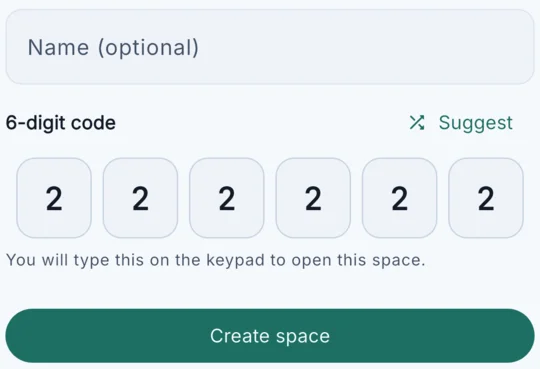
After account setup, tap the + button at the top of the keypad screen, choose New private space and set a six-digit code. An optional name helps you recognize it after opening. Keep the code safe.
2. Add a photo or video
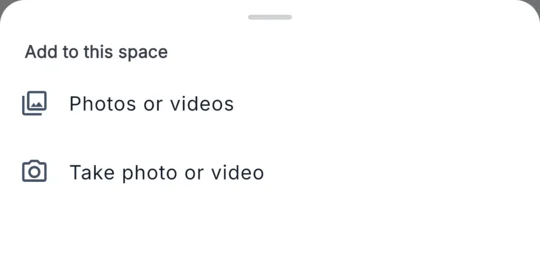
Inside the space, tap + and choose Photos or videos. Select a harmless sample and wait for it to appear. The import makes a copy: it leaves your original in Photos.
3. Close to the keypad
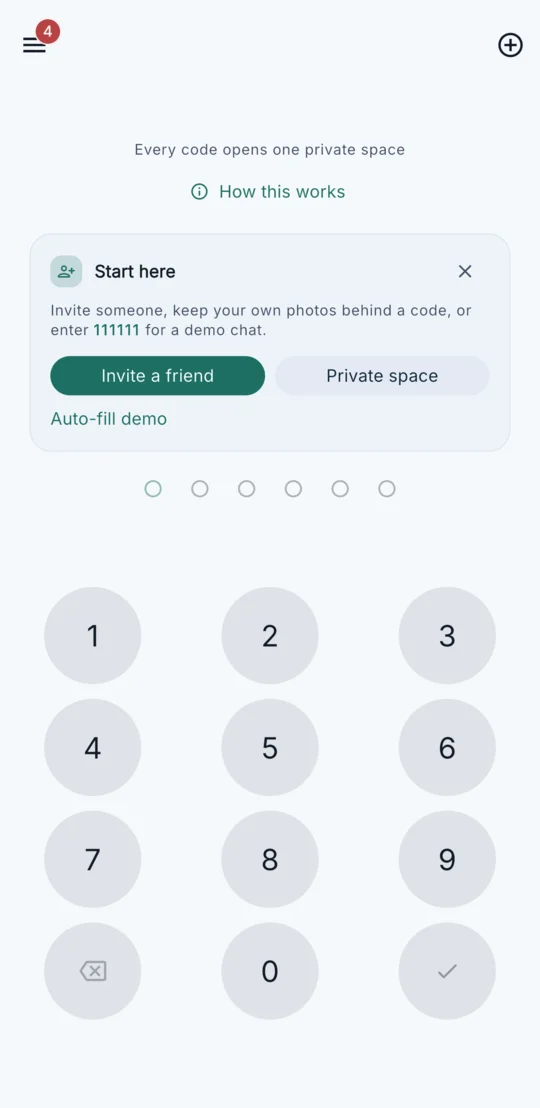
Use Back to leave the space. You return to the keypad rather than an album list on the home screen. This does not remove the original photo or every device record.
4. Reopen with that code
Enter the same space code on the keypad to open your space again. A different space has its own code; there is no master unlock or in-app forgotten-code recovery.
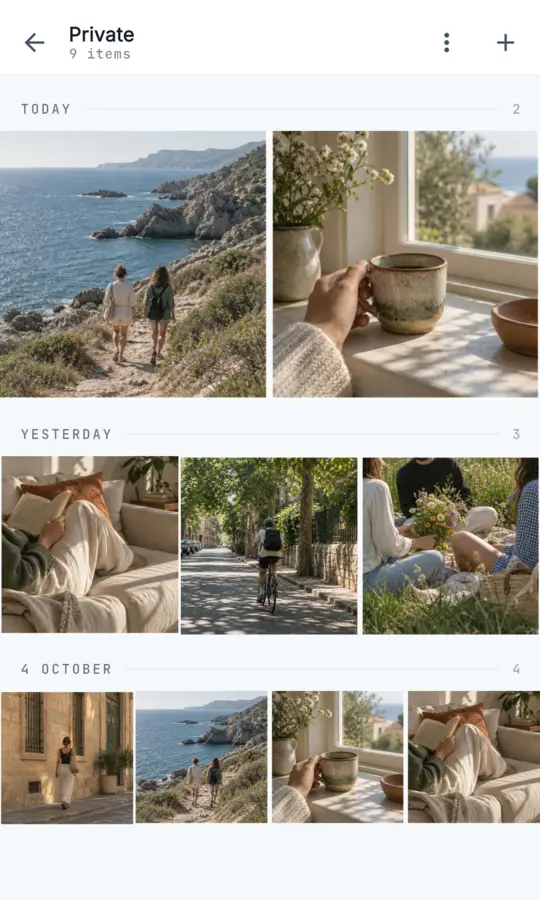
- Originals remain. Importing into Hush leaves the original in Photos. Photos and videos can retain embedded metadata, including location information.
- Recovery is limited. There is no in-app forgotten-code recovery. The default account has no implemented recovery route after session loss; do not assume reinstalling or changing devices restores it. Forgetting a code does not delete stored content.
- Backend storage. Hush stores photos, videos and access data using backend services. It is not end-to-end encrypted; six digits control access through the app, not encryption strength.
- Choose the right use. No second person is needed for your own space. Hush does not hide existing SMS or WhatsApp chats, and a discreet screen is not a promise of no device or app records.
Free includes limited personal storage; your own Plus subscription increases your Private Spaces allowances and supports larger files. A chat partner’s Plus does not upgrade your space. See current limits and prices in the app. Space items do not use the chat expiry timer; this is not a backup or permanent-retention guarantee.
Common questions
Can I set a different Google Photos Locked Folder password?
On Android, Google says Locked Folder uses the device screen lock. Anyone able to use that lock can unlock the folder.
Does Google Play prove Hush Private Spaces is available?
No. Hush’s Android listing does not establish Private Spaces availability. The Hush storage walkthrough here is explicitly an iPhone example.
Do I need someone else to install Hush?
No for your own Private Spaces on iPhone. Messaging together requires both people to use Hush.
Is a hidden folder a guarantee that nobody can discover it?
No. Check the documented lock, other copies, settings and device access. Hush’s requests, alerts, notifications and usage records can also reveal activity.
Sources and review
Official documentation reviewed 8 October 2026. Native steps vary by supported version and device. The Hush walkthrough uses the existing iPhone fixture evidence described above.

